
After years of watching students play — and playing myself — here are the strategies that separate Gimkit leaderboard champions from everyone else. No cheats. Just smarter play and deeper learning.
Why the Best Gimkit Players Aren’t Always the Smartest Kids in the Room
I watched a student who barely passed my class absolutely dominate a Gimkit session. She wasn’t the fastest reader. She never raised her hand. But she had figured out something everyone else hadn’t: Gimkit isn’t just a quiz. It’s a strategy game with rules you can learn and exploit.
The students who consistently win Gimkit aren’t always the ones who know the content best. They’re the ones who understand both the content and the game mechanics.
These aren’t cheats or exploits. They’re smarter ways to play that make you learn more in the process. Every strategy here works because it rewards genuine understanding — not shortcuts.
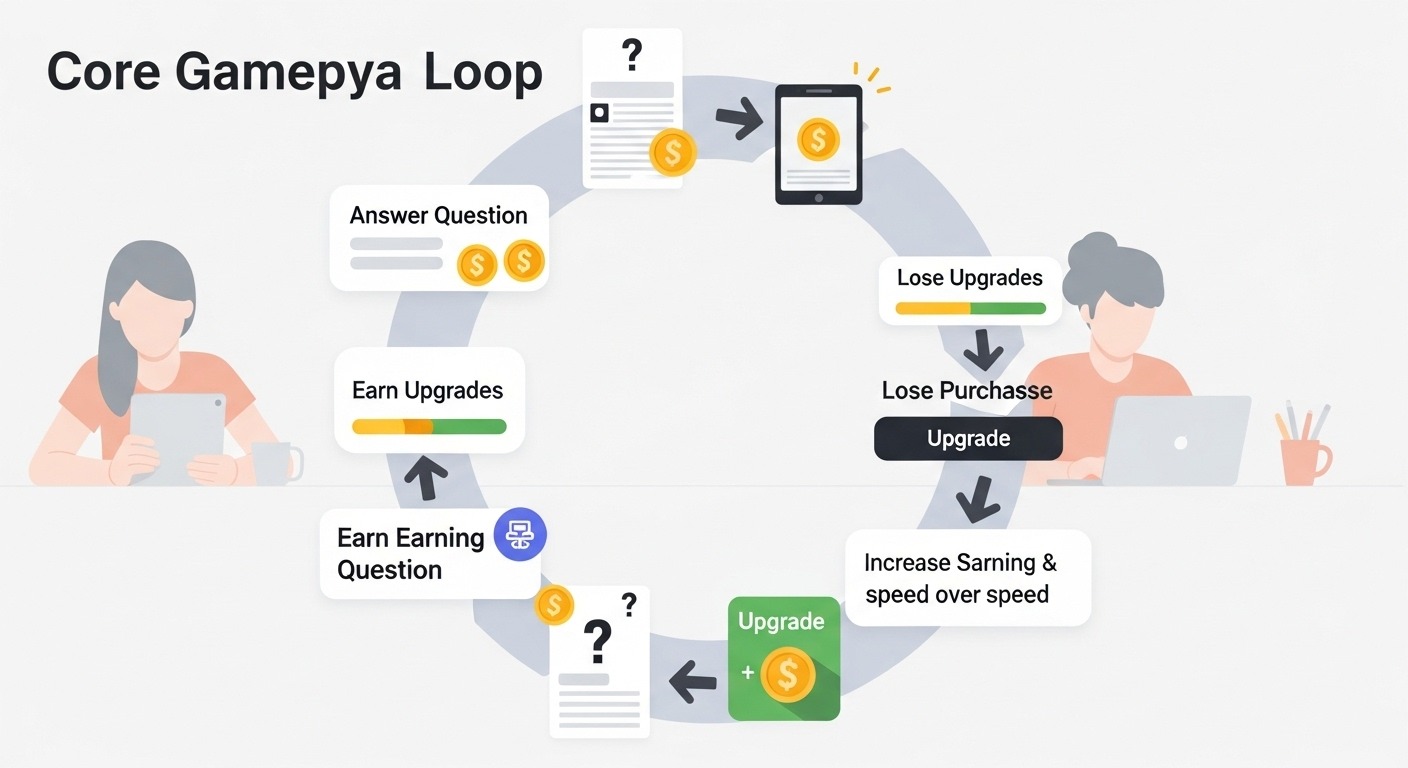
How Gimkit Actually Works (The Core Game Loop Explained)
Before any strategy makes sense, you need to understand what makes Gimkit fundamentally different from Kahoot, Blooket, or Quizlet Live.
Gimkit rewards sustained, strategic play — not raw speed:
- You answer a question
- Correct answers earn virtual money — wrong answers can cost money
- You spend money on upgrades and power-ups
- Upgrades help you earn money faster
- The cycle repeats until time runs out or someone hits the money goal
This creates a compounding feedback loop. Smart decisions in the first few minutes snowball into massive advantages by the end. The rich get richer — literally.
Understanding this loop is the foundation of every strategy below.
The 5 Fundamental Gimkit Strategies Every Student Should Know
Strategy 1: Buy Multipliers First (This Is the #1 Gimkit Tip That Exists)
The single most important decision in any Gimkit session happens in the first two minutes: what do you buy first?
Most students go for flashy power-ups or insurance. This is almost always wrong.
Here’s why the math is brutal: A multiplier upgrade that doubles or triples your earnings compounds on every single correct answer for the rest of the game. A one-time power-up that gives you $500 or steals from someone is a drop in the bucket compared to the thousands a good multiplier generates over 20 minutes.
Real example: A student with a 3x multiplier answering at moderate speed will out-earn a student with no multiplier who answers every question perfectly. The gap is that dramatic.
What to do: Your first purchase should almost always be the highest multiplier available. Save for it if you can’t afford it yet. Every minute you play without a multiplier is money left on the table.
Strategy 2: Skip Insurance (Unless You Actually Need It)
Gimkit offers insurance that protects your money when you answer wrong. Many students buy it immediately. This is usually a trap.
Insurance is expensive and only pays off if you make frequent mistakes. If you’re even moderately confident in the material, that money is better invested in multipliers that earn returns on every correct answer.
When insurance is worth buying:
- The content is genuinely difficult for you
- Wrong answers carry heavy penalties in the current game settings
- You’re protecting a lead near the end of the game
- You’re playing a mode that punishes mistakes harshly
When to skip insurance entirely:
- You’re reasonably strong on the material
- Multipliers are still available
- The game is short and you need aggressive growth
- You’re early in the session and need to build momentum
I watched one student never buy insurance across an entire semester. He invested everything in multipliers and consistently finished top three — even when he missed questions. Another student who bought insurance every single game rarely cracked the top ten.
Strategy 3: Slow Down — Speed Is Not Your Friend
This is the biggest mindset shift for students coming from Kahoot or other speed-based platforms.
Gimkit does not reward fast answers. It punishes wrong ones.
A wrong answer costs money and wastes the time you could have spent thinking properly. Students who rush and guess wrong lose money on the answer, then have less to invest in upgrades, then fall further behind. It’s a death spiral.
The winning approach: Take whatever time you need to feel confident. Read every answer option. Double-check your thinking. A correct answer at a steady pace beats a wrong answer at lightning speed every single time.
One exception: When you already have a high multiplier and you’re genuinely confident in the answer, speed does maximize earnings per minute. But confidence is the key word — guessing is never the strategy.
Strategy 4: Treat Power-Ups as Tactical Moves, Not Your Main Strategy
Power-ups feel exciting. Stealing money from the leader. Freezing someone. Getting a streak bonus. But they’re usually traps that cost more than they’re worth.
The core problem: Power-ups give one-time benefits. Multipliers give permanent, compounding benefits. A $1,000 steal feels great in the moment, but if the leader has a 5x multiplier and you don’t, they’ll earn that back in two minutes while you’re stuck at 1x.
When power-ups are genuinely worth buying:
- You’re in a close race near the end and need a final push
- You can target someone with a massive lead at a critical moment
- The power-up itself has a multiplier effect (rare but powerful)
- You’ve already maxed out your multiplier upgrades
General rule: Spend on permanent upgrades first. Use power-ups as occasional tactical weapons, not your primary investment.
Strategy 5: Actually Read the Correct Answer When You Miss a Question
This is where Gimkit becomes a genuinely powerful learning tool — and where most students completely waste the opportunity.
When you answer wrong, Gimkit shows you the correct answer. Most students click past it instantly to rush to the next question.
This is a massive mistake.
Here’s why: You will see that exact question again — probably multiple times in the same session. Getting it wrong once and actually learning the answer means you’ll earn money on it every time it comes back. Clicking past the feedback means you’ll keep getting it wrong and keep losing money.
Students who pause and absorb correct answers improve dramatically within a single game session. Students who ignore feedback stay stuck, repeating the same mistakes and bleeding money.
The smart play: Spend three seconds reading why you were wrong. That tiny investment pays dividends for the rest of the game — and on test day.
Gimkit Strategy by Game Mode
Different modes reward different approaches. Here’s what works in each one.
Classic Mode Strategy
This is where all five fundamental strategies matter most.
Focus on:
- Buying multipliers before anything else
- Accuracy over speed — always
- Ignoring most power-ups until late game
- Learning from every wrong answer
Classic mode rewards patient, disciplined play. The tortoise beats the hare almost every time.
Team Mode Strategy
Individual fundamentals still apply, but team dynamics change the equation.
What works in team mode:
- Coordinate with teammates when possible — assign roles (one person focuses on multipliers, another handles power-ups)
- Contribute steadily rather than chasing flashy individual plays
- Never use aggressive power-ups that accidentally hurt your own team
- Consistency beats individual brilliance in team scoring
Boss Battles Strategy
This cooperative mode flips priorities completely.
What to focus on:
- Pure accuracy — every correct answer deals damage for the whole team
- Forget personal earnings — the goal is collective damage output
- Coordinate attacks if your teacher allows communication
- Support struggling teammates instead of competing against them
Boss Battles become incredible community experiences when students embrace the cooperative nature instead of playing selfishly.
Trust No One Strategy
Social deduction modes are more about reading people than mastering content.
What matters here:
- Pay attention to voting patterns more than money totals
- Use question rounds to gather information about other players
- Balance content performance with social strategy
- Don’t get so caught up in deception that you stop learning
Trust No One is incredibly fun but delivers less pure content review than other modes. Enjoy it as a change of pace.
Floor Is Lava Strategy
Survival mode where wrong answers eliminate you instantly.
What to focus on:
- Maximum accuracy — one wrong answer and you’re done
- Read every option completely before answering
- Don’t let time pressure force a guess
- Triple-check anything you’re uncertain about
This mode rewards the most careful, deliberate players. Speed is irrelevant if it makes you fall into lava.
The Mental Game: Gimkit Psychology That Wins Sessions
Don’t Panic When Someone Has a Huge Lead
Seeing a classmate at $50,000 while you’re at $2,000 feels crushing. But here’s what’s usually happening: early leaders often blew all their money on power-ups and skipped multipliers. They sprinted while you built a compounding engine.
Stay focused on your own strategy. Multiplier math means comebacks aren’t just possible — they’re common. The student at $50,000 with no multiplier will plateau. You at $2,000 with a 5x multiplier are about to take off.
Break the Panic-Mistake Cycle
When you’re behind, panic leads to rushing. Rushing leads to wrong answers. Wrong answers cost money. Less money means fewer upgrades. Fewer upgrades mean falling further behind.
Break the cycle: Take a breath. Refocus on accuracy. Rebuild your multipliers. The math will work in your favor if you stay disciplined instead of desperate.
Redefine What Winning Means
This is the most important mindset shift in this entire guide.
Getting a question wrong but learning the correct answer is a victory.
Answering everything perfectly but learning nothing is a loss.
Students who care about mastering the material naturally develop better strategies because they’re paying attention to content, not just scores. Students who only chase the leaderboard plateau fast.
Advanced Gimkit Strategies for Experienced Players
The Streak Multiplier Strategy
Some upgrades reward consecutive correct answers with bonus earnings. Combined with base multipliers, streaks become incredibly powerful.
How to execute:
- Only answer questions you’re genuinely confident about
- Take extra time on questions that might break your streak
- Use streak bonuses to fund even better multiplier upgrades
- Accept that building streaks requires discipline — resist the urge to guess
The Late-Game Power-Up Bomb
In longer sessions, saving money for one massive late-game power-up can swing the entire outcome.
When this works:
- You already have strong multipliers generating steady income
- You’re within striking distance of the leader
- A high-value power-up becomes available in the final minutes
Timing is everything. Too early and you sacrifice compounding time. Too late and the game ends before it matters.
The Team Sacrifice Play
In team modes, one player can deliberately sacrifice their own position to benefit the team — using power-ups to weaken opponents or boost teammates at personal cost.
This requires communication and trust, but a coordinated sacrifice play can be devastatingly effective in close team races.
Gimkit Tips for Different Types of Students
For Students Who Get Anxious During Games
Remember: Nobody can see your screen. Nobody knows your pace. Take whatever time you need on every question. Gimkit’s design is actually much kinder to anxious learners than speed-based platforms like Kahoot.
Focus on learning rather than competing. You’ll be surprised how well you do when the pressure comes off.
For Visual Learners
Pay close attention to any images, diagrams, or visual elements in questions. They often contain clues that text alone doesn’t provide. Take time to really examine visual information before answering.
For Students Who Learn by Talking
If your teacher allows discussion (especially in team mode), explain your reasoning out loud. Hearing yourself work through a problem cements understanding far better than silently clicking.
For Students Who Learn by Doing
The physical act of navigating menus, buying upgrades, and making strategic decisions provides more engagement than passive review. If possible, stand or move slightly while playing — physical engagement helps some brains process information better.
How to Use Gimkit Homework Assignments Strategically
When teachers assign Gimkit for independent practice, the dynamics shift completely in your favor:
- Zero competition pressure — focus entirely on understanding
- Unlimited time — spend as long as you need on difficult questions
- No social consequences — experiment freely with different strategies
- Pure repetition benefit — the compounding review effect is strongest when you’re relaxed
Treat homework sessions as strategy laboratories. Try different upgrade paths. See what purchase order works best. The insights you gain transfer directly to competitive classroom sessions.
Playing Gimkit Fairly: What Crosses the Line
Quick notes on ethics that matter:
Don’t share answers during live games. It defeats the learning purpose and undermines your own growth.
Don’t use multiple devices. Playing on two screens to double earnings is cheating — and teachers can almost always tell.
Don’t manipulate game settings if you somehow gain access. The honor system matters.
Focus on learning, not just winning. The student who learns the most wins in the long run, regardless of what the leaderboard says today.
Your Complete Gimkit Game Plan (Copy This)
Here’s exactly what a dominant Gimkit session looks like from start to finish:
Minutes 1–5 (Setup Phase)
Answer carefully. Save money. Buy the best multiplier available as soon as possible. Do not touch power-ups or insurance.
Minutes 5–15 (Growth Phase)
Maintain accuracy. Buy additional multipliers as they become available. Continue avoiding most power-ups. Learn from every wrong answer.
Minutes 15–20 (Assessment Phase)
Check your position. Behind? Stay patient — your multipliers are compounding. Leading? Consider insurance or one strategic power-up to protect your advantage.
Final Minutes (Closing Phase)
Use remaining money for a final push if needed. Don’t panic-spend on random power-ups. Stay accurate until the clock runs out.
Throughout the entire game:
Learn from every wrong answer. Take your time. Prioritize accuracy over speed. Stay calm regardless of the leaderboard.
The Only Gimkit Strategy That Truly Matters
After breaking down every tactic, upgrade path, and psychological edge, the single most effective strategy is the simplest one:
Care about learning more than winning.
Students who genuinely want to master the material naturally pay closer attention to questions, absorb feedback from wrong answers, and develop better instincts over time. The leaderboard follows the learning — not the other way around.
The leaderboard resets every session. The knowledge stays forever.
Play smart. Learn deeply. The wins will follow.
Now go dominate your next Gimkit — and actually remember everything when test day arrives.